

The purchase of an agricultural machine is only the beginning of the investment. The way it is maintained and the components used for repairs influence its availability during the campaign, the quality of the work, and the operating costs. Timely replacement of a worn part can protect the surrounding components as well, avoiding turning a simple intervention into a costly repair.
The choice of replacement parts for agricultural machinery should be based on compatibility, the component’s role, and working conditions. Price is important, but it must be analyzed in conjunction with the lifespan, the labor involved, and the consequences of any downtime.
What difference there is between the original parts and the aftermarket ones
An original part is marketed under the brand of the machinery manufacturer and is intended for the applications defined by it. It can be manufactured by the manufacturer or by its supplier. In the present comparison, aftermarket parts are alternatives offered under other brands to replace existing components. Their quality and documentation differ from one manufacturer to another.
Aftermarket does not mean „second-hand”. An aftermarket part can be new, and an original part can come from dismantled vehicles. The origin and condition of the product are separate criteria. Second-hand parts have already been used, while refurbished components undergo interventions whose content must be verified: what was replaced, how it was tested, and what warranty is offered.
What advantages and disadvantages do new original parts have?
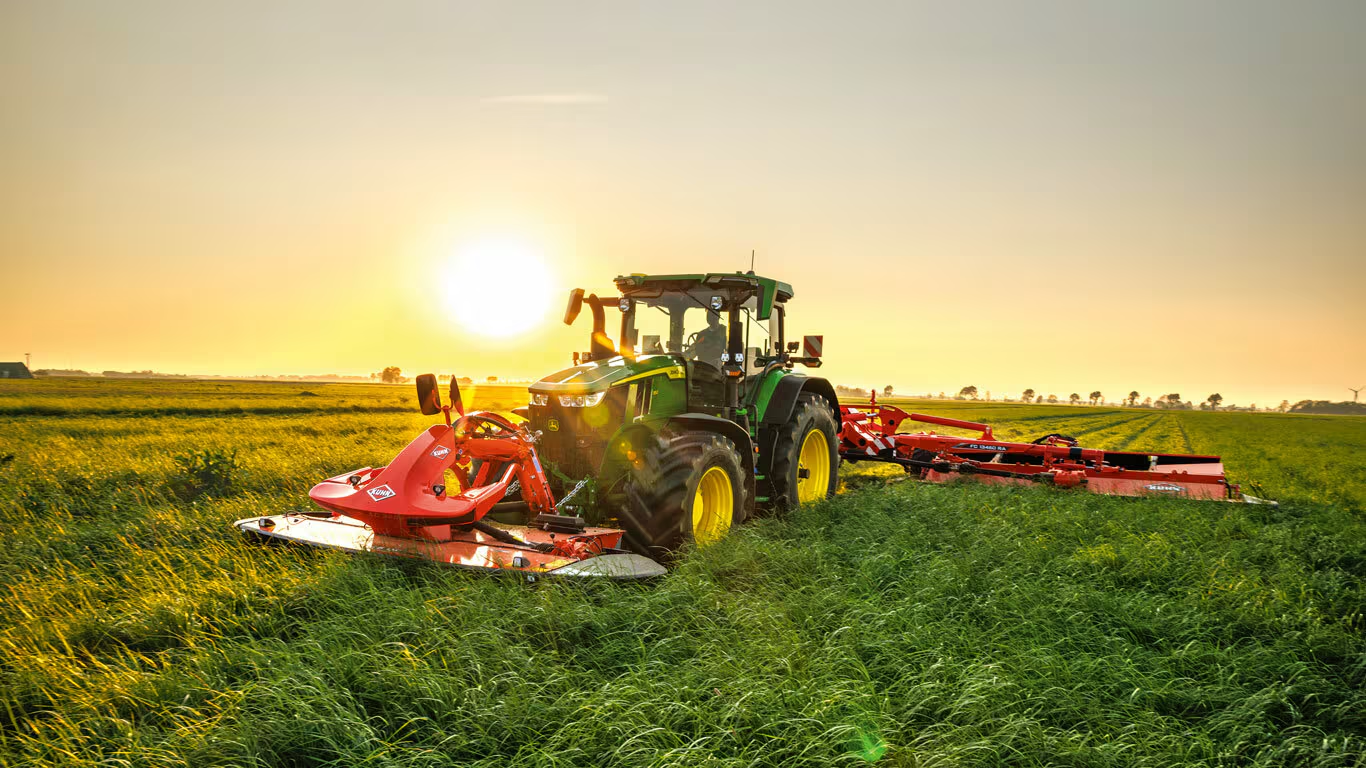
The main advantage is identification through the manufacturer's catalog and compliance with the machine's specifications. For a correctly selected reference, this simplifies compatibility verification and access to assembly instructions or technical support. In the case of original KUHN pieces, Identifying the machine by catalog and serial number helps verify compatibility.
The price may be higher than that of an alternative, and some references may require ordering and waiting time. Even the „original” label does not replace identifying the machine by its serial number: configurations and construction revisions may differ. The lifespan also depends on assembly, adjustments, lubrication, and the conditions of use.
When new aftermarket parts can be useful
A well-documented aftermarket product can offer a lower purchase cost or an additional source of supply. It can be an option for older machines or standardized components, if technical equivalence is confirmed. However, not all alternatives are cheaper and not all have the same durability.
The difficulty lies in verifying the differences that are not visible: the material, the heat treatment, the precision of manufacture, or the performance in operation. The mention „compatible with” and visual similarity are not sufficient. An identifiable manufacturer, clear specifications, the correspondence of codes, and known warranty conditions are required.
For which components original parts deserve priority?
For parts whose defect may affect safety, damage expensive assemblies, or compromise the accuracy of the work, the original part may be a prudent starting point. An alternative can only be considered with documented equivalency and the necessary technical confirmation. The criterion is the risk of the application, not just the brand written on the packaging.
Tractors, telescopic loaders and agricultural transport vehicles. The braking, steering, lifting, injection, transmission and high-pressure hydraulics components require rigorous verification. For valves, pumps or electronic control elements, adjustments and compatibility with the system must also be confirmed.
Combine, forage harvesting equipment, presses and choppers. Knives, rotating elements, components of cutting systems and those of the transmission can operate at high speeds or loads. Shape, weight and balance matter, and an apparently simple part is not automatically suitable for replacement with a generic product. The need for a replacement in a set is also checked, if the manual requires it.
Seeders, herbicides and fertilizer distributors. The dosing parts, sensors, and nozzles influence the uniformity of application. An alternative product may be suitable if it has the required characteristics, but assembly must be followed by the checks and calibrations provided for the machinery. An identical connection does not prove an identical flow or distribution.
Motor pumps and irrigation systems. In the case of seals, rotors, regulators and components under pressure, the materials, the operating pressure and the requirements of the pump are checked.
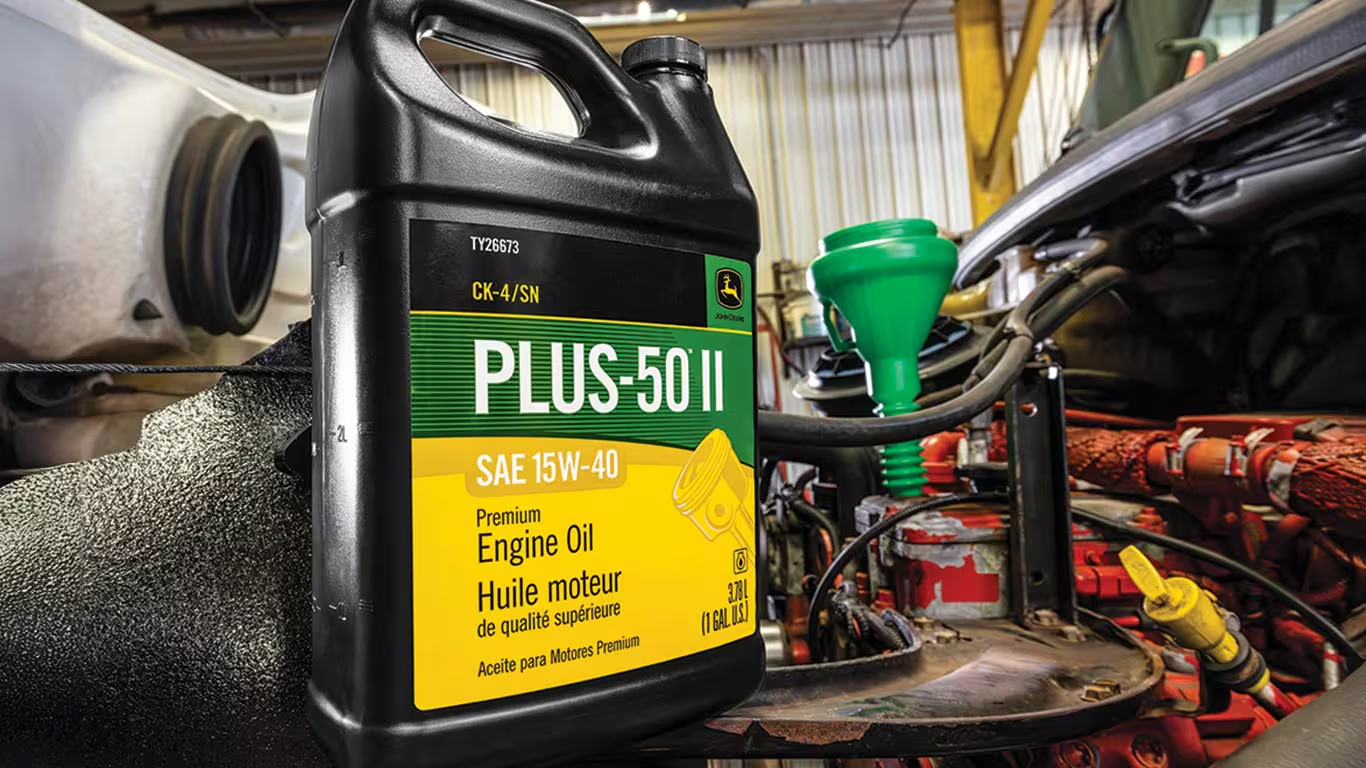
Filters require attention on all machines equipped with them. Two filters with the same shape can have different filter media, valves or flow characteristics. When choosing one or the other, it is important to consider the flow characteristics of the system. John Deere filter or equivalent devices, the complete specification for the respective circuit must be verified. A cheap filter is not necessarily a savings if the protection of the motor or hydraulics is insufficient.
Which aftermarket alternatives are suitable for which parts?
Alternatives can be easier to evaluate for accessories without a safety role, such as certain handles or comfort elements in the cabin, and for some standardized components. Even then, their assembly, material, and conditions of use must be verified. A body part that protects a moving mechanism is no longer a simple accessory.
In the case of rain, cultivators and grape-pruning shears can also be considered wear parts., Such as certain notches or tips. The geometry, hardness, grip system and behavior in the ground are important. Bednar-origin parts They can serve as a reference point for the corresponding applications. The relevant cost is that reported for the area worked, not just the price of a single piece.
Bearings, belts and screws should not be considered interchangeable just because they have the same dimensions. The allowable load, sealing, profile or strength class can change the choice. There is no list of risk-free aftermarket parts for any application.
How second-hand parts compare with refurbished ones
Second-hand parts can have a lower purchase cost and can help repair old machinery for which certain benchmarks are difficult to find. The limit is the history: wear and tear, previous wear and tear, and the remaining lifespan can be difficult to assess. The provenance, testing, and returnability must be clarified before purchase. For safety components, choosing a part with an unknown history should be avoided.
Documented refurbishment provides more information than the simple resale of a used piece of equipment. John Deere Reman components They are refurbished by replacing worn-out elements and testing the assemblies according to the original specifications. For the specific part, the availability, warranty conditions, and the possible requirement to return the old part are verified.
What needs to be checked before buying agricultural parts
- the brand, model, series of the machinery and the exact code of the reference point, including any replacement codes
- The origin and condition of the item: new, used or refurbished, with the corresponding documents
- the technical specifications, assembly conditions and any adjustments or calibrations
- the warranty of the part, the return conditions and any service or warranty conditions of the machinery
- delivery term and total cost: part, transport, labor, consumables and downtime
A cheaper piece may be a good choice if it meets the requirements and offers a suitable lifespan. If it requires more frequent replacements or generates repeated interventions, the initial savings may be lost. The comparison must be made for the same application and under similar operating conditions.
Conclusions for choosing replacement parts
Original, aftermarket, used and reconditioned parts are not equivalent categories. The right choice begins with accurately identifying the component and assessing the consequences of a malfunction. For critical systems, it is prudent to prioritize original parts or alternatives with well-documented technical equivalence. For all agricultural machinery, compatibility, proper assembly, and cost over the lifetime of use weigh more than the price on the label.