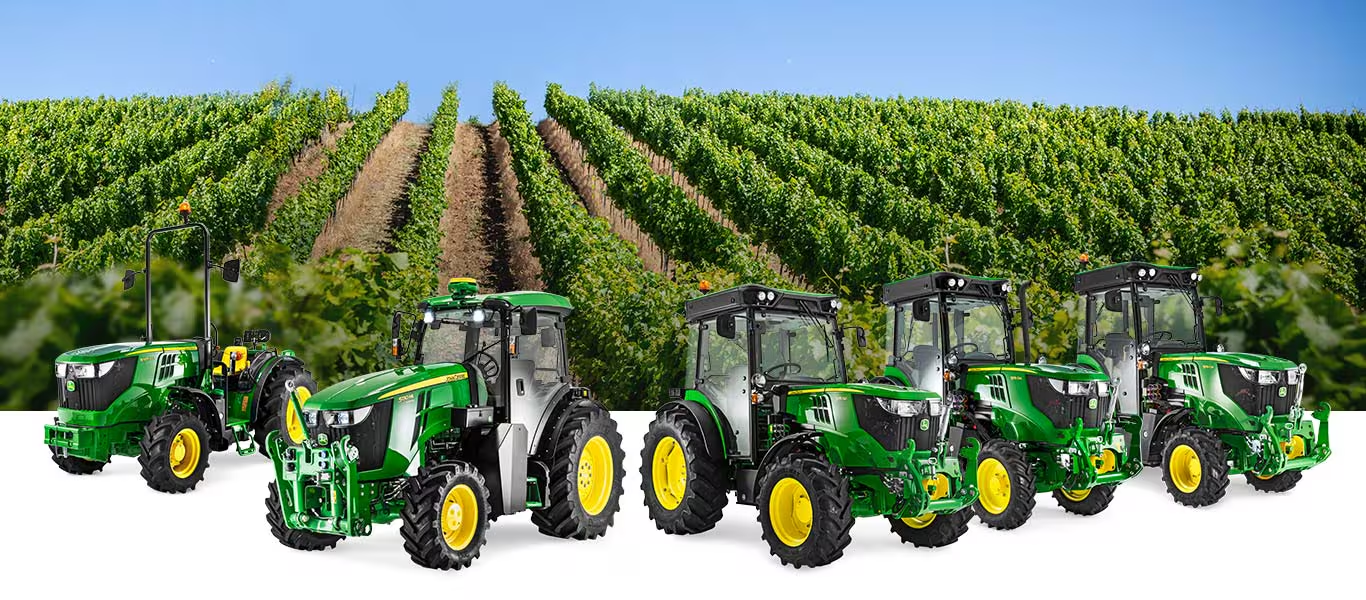
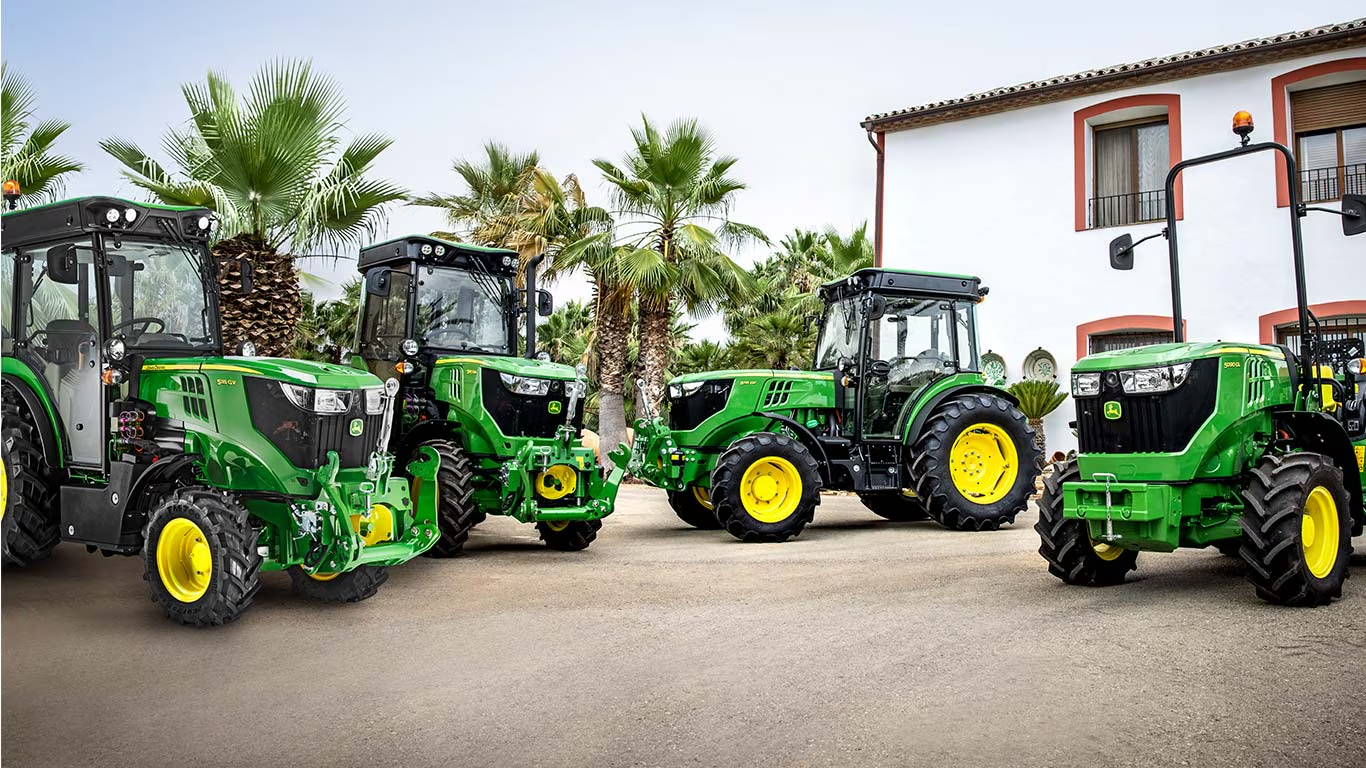
John Deere 5G tractors They are developed for work in vineyards, orchards and other special crops, where compact dimensions, maneuverability and adaptability to tight spaces are essential. The range includes John Deere GF and GV tractors, With configurations adapted to different row widths and working requirements.
The 5G Series models combine the power needed for specialized agricultural work with a low turning radius, comfortable cabin options, and inverter transmissions for more efficient maneuvering between rows and in areas with limited space.
The John Deere range is recognized for the balance between comfort, performance and the quality of the working experience. These features are also found in the 5G Series, but they are adapted to the specific needs of working in vineyards, orchards and other special crops, where operator maneuverability and comfort are particularly important.
Engines of up to 120 HP and inverter transmission options allow the tractor to be adapted to different jobs and specific operating conditions.
The compact dimensions and the short turning radius facilitate movement and maneuvering in vineyards, orchards and other crops with limited space between rows.
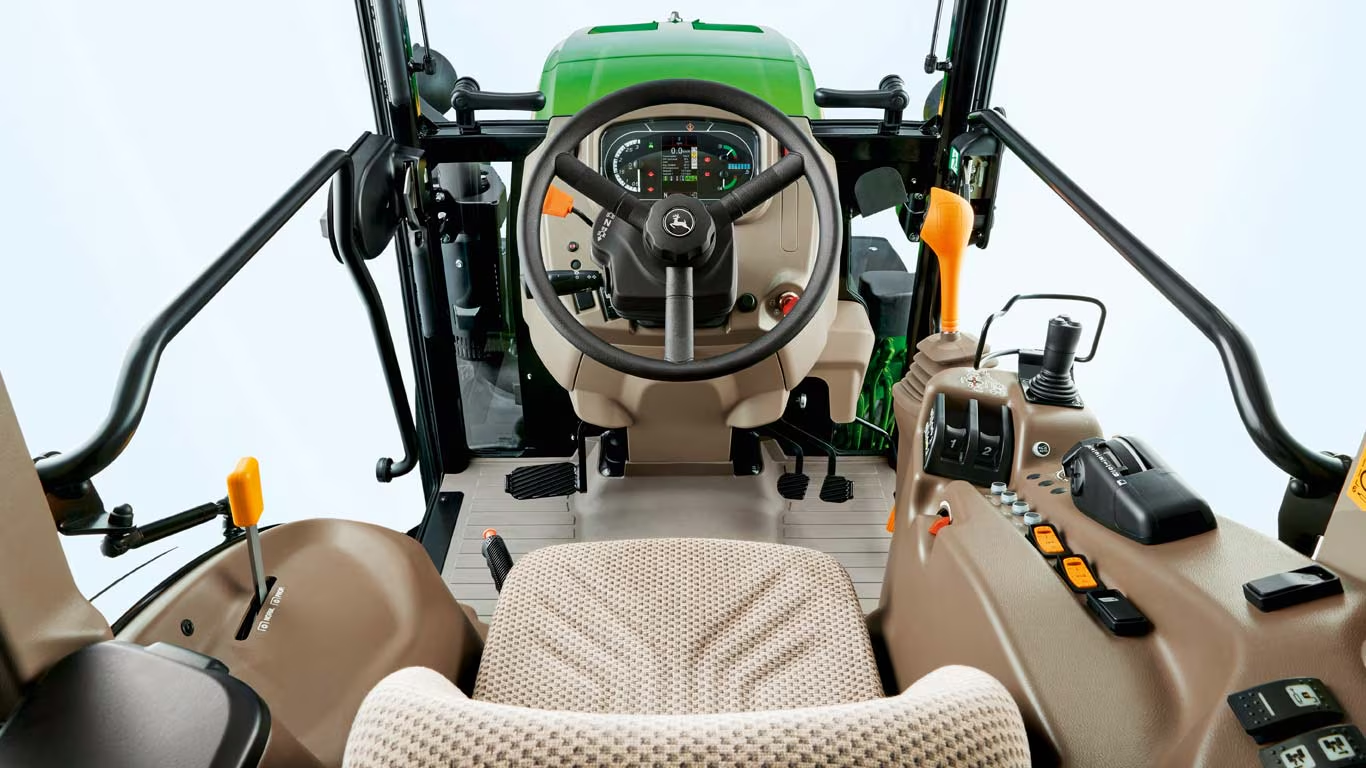
The cabin offers good visibility, ergonomic working position and a high level of comfort during the work carried out in the plantations.
The dimensions of the tractor must be matched to the distance between the rows and the space available for movement and maneuvering.
A reduced turning radius facilitates turns at the end of the row and maneuvers in tight spaces. The 5G series can have a direction angle of up to 43°.
For long-term operations, ergonomics, visibility, and air filtration can influence operator comfort. Some 5G configurations are available with category 4 cabin filtration.
The transmission must be selected based on the frequency of the maneuvers and the type of work. The range includes PowrReverser™ configurations and transmissions with a mechanical inverter, depending on the model and equipment.
| Model | Maximum power | Configuration | Webcast | Recommended use | The main difference |
|---|---|---|---|---|---|
| 5075GF or 5075GV | 75 HP | GF/GV | PowrReverser™ 24F/12R or mechanical inverter, depending on the version | Work in vineyards, orchards and plantations, with low power requirements, frequent maneuvers and limited space between rows. | The entry-level variant of the range, suitable for lighter applications and routine work in plantations. |
| 5090GF or 5090GV | approx. 90 HP | GF/GV | Inverter configurations for specialized agricultural applications | Current work in plantations, where a balance is needed between compact dimensions and an additional reserve of power. | It offers a good balance between maneuverability, compact dimensions and available power. |
| 5105GF or 5105GV | approx. 105 HP | GF/GV | Inverter transmissions, suitable for frequent changes of direction | Suitable for more demanding work and for the use of equipment requiring higher power. | It brings added power for various machines and applications with higher requirements. |
| 5115GF or 5115GV | up to 120 HP | GF/GV | PowrReverser™ electric or mechanical inverter; up to 30F/15R in certain configurations with cabin | Intensive work in vineyards, orchards and special crops, including on difficult terrains and with more demanding equipment. | The most powerful variant in the 5G range, with the most resources for intensive applications. |


The 5G series is especially intended for work in vineyards, orchards and other special crops, where compact dimensions and high maneuverability are required.
It is important to analyze the row width, the space available at the end of the rows, the slope of the terrain, the types of work and equipment that are to be used.
On slopes, stability, mass distribution and compatibility with the machinery used are important factors. The tractor configuration must be chosen based on the actual operating conditions.
The required power, weight, and mounting method of the equipment can influence the choice of model and configuration. More demanding machines may require an additional reserve of power and stability.
The stability of the tractor, the traction, the ground clearance and the control of the equipment are important criteria for maintaining a safe and uniform work.
The cabin can provide additional protection against dust, noise and external conditions, while contributing to operator comfort during long-term work.