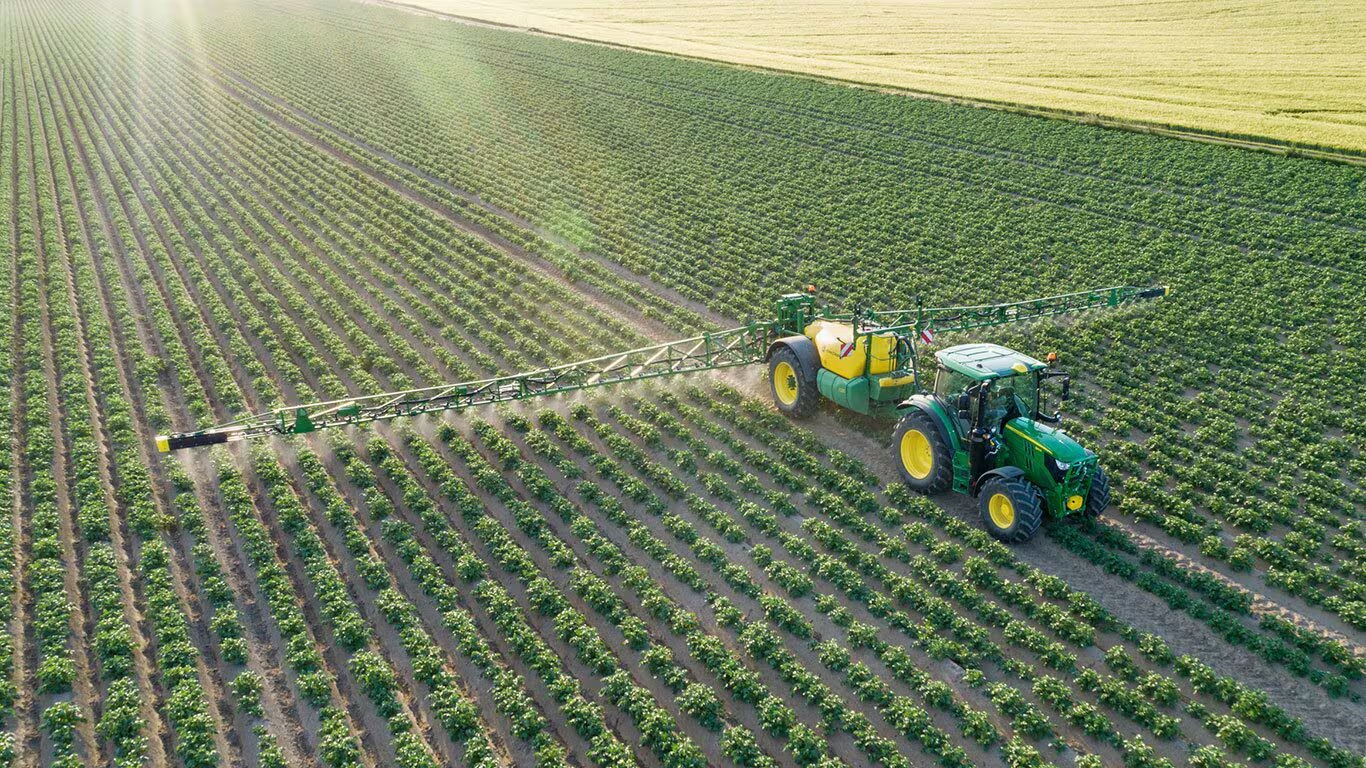
Fertilization and plant protection technologies help farmers apply inputs more precisely, depending on the conditions and needs of each area of the parcel. Through active guidance, satellite monitoring of crops, variable rate application, and selective spraying, treatments can be planned and executed with better control over the quantities applied.
Solutions available through IPSO include technologies such as Active Implement Guidance, VRA and See & Spray™, This system contributes to tailored fertilization of the field, the identification of weeds and the efficient use of inputs. The field data and satellite images can also support decisions regarding fertilization and plant protection work.
Within a plot, the need for fertilization or treatment is not always uniform. Differences in vegetation, the pressure of weeds or the peculiarities of the terrain They may require different approaches from one area to another.
By combining field data with satellite monitoring and precision application technologies, the farmer can better adapt the work to the real situation on the plot. VRA can adjust the applied amount, See & Spray™ It can identify weeds and direct the treatment to the necessary areas, and the guidance systems help the machine follow the established route.
The result is better control over the implementation of inputs and clearer documentation of the work performed.
Satellite images help identify the differences between the plot areas and track the state of the crops.
The available data provide support for determining areas that require fertilization or treatments, and for dosage adapted to the plot.
The VRA technology adapts the applied dose, and the See & Spray™ allows selective spraying and weed identification.
The data generated during the operation can be used later for analysis, intervention planning, and farm management.
| If you need to... | The right technology | What it helps you with |
|---|---|---|
| Keep the machine on the correct route | Active Implement Guidance | reduces irregularities and supports a more precise implementation |
| You are observing the differences in culture | Satellite monitoring | highlights areas with different development |
| you adapt the amount applied | VRA | allows for differentiated dosing depending on the plot |
| Identify and selectively treat weeds | See & Spray™ | detects weeds and allows spraying only where necessary |
| you use the inputs more efficiently | VRA + See & Spray™ | helps to limit unnecessary applications |
| You plan better the treatments | Satellite monitoring + VRA | helps in determining the areas and quantities to be applied |

System that controls the direction of the machine (attached to the tractor) so that it accurately follow the guidance line, minimising drift caused by terrain conditions or gravity.

Imaging multispectral and vegetation index (NDVI/NDRE etc.) provided by integrated platforms (One Soil) for monitoring crop condition almost in real time.

Variable application of crop protection products (herbicides, fungicides, insecticides) based on VRA maps generated from data (images satellite, productivity map, real-time sensors) or decision algorithms.

Technology based on cameras and computer algorithms vision / machine learning that detects unwanted plants (weeds) and applies herbicide only where needed.
VRA – Variable Rate Application – is a technology that allows the adjustment of the amount of input applied in different areas of a plot. The application can be performed based on prescription maps or data available from the field.
Selective spraying uses cameras and analysis systems to identify areas or plants that need treatment. The technology allows the herbicide to be applied only where it is needed.
See & Spray™ is a John Deere technology that uses cameras and computer analysis of images to identify weeds and apply selective treatments.
Satellite images allow for the observation of the differences in vegetation between the areas of a plot. This information can help farmers identify areas that require verification and better plan their field work.
The variable rate application allows the quantities to be adapted according to the characteristics of the different areas of the plot, contributing to better control of inputs and reducing unnecessary applications.