
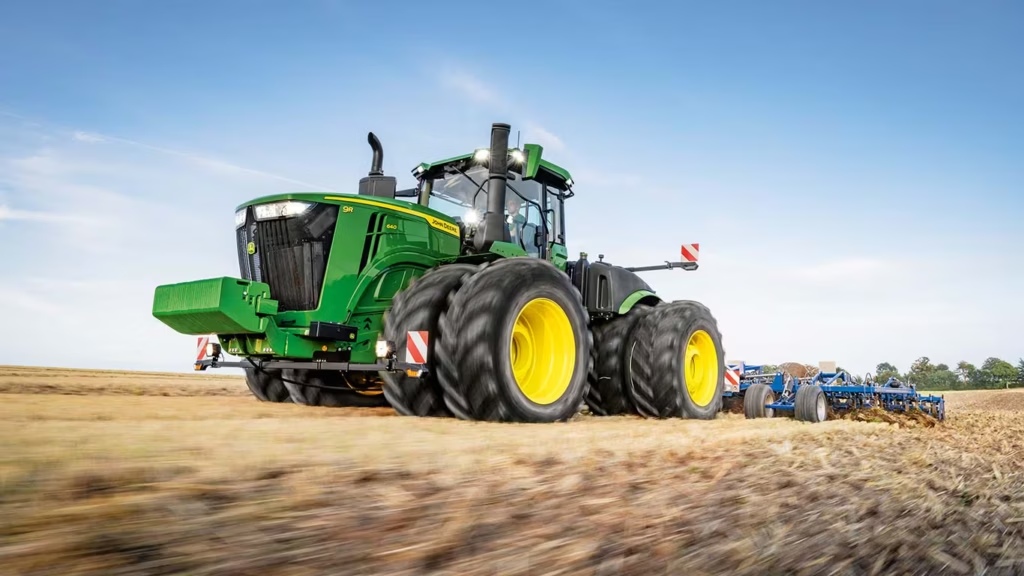
The tractor, essential in streamlining agricultural work, requires careful investment in components to maximise performance and durability. This robust agricultural machinery can radically transform how you manage field activities, but its success depends on adequate equipment.
Ensuring every component is in optimum condition not only improves functionality, but also extends the time you can enjoy its benefits, making it a reliable partner in any farming operation.
Main components of a tractor
- Tractor transmission
Transmission plays an essential role in the efficiency and ease of use of a tractor. By opting for the right type of transmission, you can significantly influence a tractor's performance. Transmissions can be of three types: mechanical, hydraulic, and electric.
- Braking and steering
Although a tractor is not designed for high speeds, the braking and steering system is very important. Being a vehicle weighing several tonnes, it requires robust brakes for maximum safety.
Wheels and tyres are essential elements, contributing to stability and confidence during tractor operation. Their quality can directly affect the tractor's functionality and durability, especially in difficult terrain conditions.
- The engine
At the heart of any efficient tractor is the engine, and most are equipped with robust diesel engines. A good knowledge of engine components can ensure proper maintenance and extend the life of your tractor.
These elements together form the backbone of some John Deere equipment, ensuring that the tractor can efficiently carry out the agricultural tasks for which it was designed. Careful selection of components and regular maintenance are essential for maximising the performance and durability of this indispensable piece of machinery in modern agriculture.
How many types can tractors be?
Tractors prove to be indispensable equipment, adapted to meet the diverse needs of farmers. These machines are essential for streamlining fieldwork and are classified based on several criteria, such as construction, power, and specific use. Understanding the main types of tractors helps in choosing a suitable tractor for each farm, with each category designed to offer optimal solutions for different types of agricultural work.
Tractor types by construction:
- Horse-type tractors (self-propelled): These are the most common on large fields, giving the driver the opportunity to sit comfortably while operating the machine. They are fitted with four wheels and can be equipped with various attachments for ploughing, sowing, harvesting or spreading fertiliser. Their variability in size and power makes them extremely versatile.
- Pedestrian tractors (2-wheel or motorbike)Designed for smaller areas, these tractors are manoeuvred by pedestrian operators. They usually have just two wheels and are ideal for gardens or confined spaces where access with larger tractors would be difficult.
Classifying tractors by horsepower:
- Small tractors with a power of up to 25 HP, suitable for light duties and confined spaces.
- Medium tractors: with power outputs between 25 and 45 HP, becoming more versatile through the ability to perform a wider range of activities.
- Large tractors: Over 45 HP, these are designed for extensive and demanding works, capable of operating a wide variety of attachments.
Specific use of tractors:
- Universal tractors. These can be used for almost any type of field work, from ploughing to harvesting, thanks to their ability to support different types of attachments.
- Orchard Tractors The design and dimensions of these tractors are optimised to navigate between rows of trees, facilitating maintenance and harvesting operations.
- Garden tractors: With power outputs between 1 and 10 HP, these tractors are ideal for small and medium-sized areas, including work in polytunnels and greenhouses, thanks to their excellent manoeuvrability.
- Rotary tillers These mini-tractors are perfect for soil preparation and seedbeds, being specific for use in small spaces.
Accessories that can be mounted on an agricultural tractor
The tractor proves to be extremely versatile thanks to the vast range of agricultural tractor accessories compatible. These transform the tractor into machinery capable of carrying out a multitude of agricultural operations, improving efficiency and reducing working time. Alongside the best farm management solutions, The tractor is the centrepiece of the farming industry.
Tractor accessories range from those intended for soil preparation, such as ploughs, tillers, rotary tillers, and harrows, to those used for crop maintenance, like combi-drills – cultivators, hoes, and mowers. The tractor can also be equipped with specialised machinery for managing and recycling plant waste, including forage and plant waste shredders.
For sowing and planting work, the tractor can be equipped with seed drills and planters, facilitating essential cultivation processes. For harvesting, specialised machines can be attached, saving time and resources.
Tractors can also play a key role in fertiliser management, equipped with soil incorporators or fertiliser spreaders, as well as sprayers for plant protection.
For production or material transport, agricultural trailers and tankers can be used. The tractor can be converted into a winter service vehicle, equipped with snow blowers, salt spreaders and sweeping brushes.
Last but not least, attachments such as front loaders, backhoes, and other tools such as a digger or levelling blade extend the tractor's functionality beyond agriculture, making it useful for construction or maintenance work.
Tips for buying a quality tractor
When it comes to buying an agricultural tractor, it's essential to consider several key aspects to ensure that your investment will fulfil your needs in the long term.
- Tractor power
This is an essential criterion in selecting a tractor, as it must match the scale and difficulty of the tasks you will be carrying out on your land. An undersized tractor will be inefficient, and an oversized one can mean unnecessary costs.
- Opening hours and history
For second-hand tractors it is very important to check how much the machine has been used. A high number of operating hours and a history of heavy use can indicate significant wear and tear. The tractor's age can also influence its price and performance.
- Signs of wear and previous repairs
Visually inspecting your tractor can reveal a lot about its current condition. Check for signs of welding, major repairs or other damage, which may indicate poor maintenance.
- Additional equipment and accessories
Analyse whether the tractor can be equipped with additional attachments needed for the specific types of work on your farm. Sometimes investing in a tractor with more features can eliminate the need to purchase several separate machines.
- Operator comfort
If the tractor will be used for long periods, comfort becomes an important factor. Items such as air conditioning, an ergonomically designed seat and good cab sound insulation can make all the difference to the operator's productivity and well-being.
- Brand choice
A tractor from a well-established manufacturer with a solid reputation in the industry offers not only reliability but also better resale value. Reputable brands often also offer superior technical support.
- Supplier support and guarantees
Make sure that the relationship with the supplier includes not only delivery but also after-sales support such as warranty, maintenance services and access to parts for machines agricultural exchange.


